
The First Commission: Fill the Earth
Long before the Great Commission in Matthew 28, God expressed His desire for an Earth filled with His representatives. In one of the most foundational passages in the first book of the Bible, God reveals His purpose for mankind.
26 Then God said, “Let us make man in our image, after our likeness. And let them have dominion over the fish of the sea and over the birds of the heavens and over the livestock and over all the earth and over every creeping thing that creeps on the earth.” 27 So God created man in his own image, in the image of God he created him; male and female he created them. 28 And God blessed them. And God said to them, “Be fruitful and multiply and fill the earth and subdue it, and have dominion over the fish of the sea and over the birds of the heavens and over every living thing that moves on the earth.” (Genesis 1:26-28)
In this passage, God establishes the function of mankind on the planet. He is, by his very nature, to serve as God’s representative. Man cannot escape this responsibility since God baked it from the start. We are created in God’s image! More than that, God has entrusted man with the responsibility of exercising His dominion over everything else that was created. God created man to glorify Him through representation within creation.
But that is not where this text ends. The function of representation is also given a scope: the entire Earth. The instructions given by the Creator are for mankind to be fruitful, multiply, and fill the Earth! It is through the multiplication and spread of His people that God’s glory spreads from one location to every location.
Unfortunately, it didn’t take long for sin to be interjected into this equation. Instead of filling the Earth with the glory of God, sinful man filled it with something unimaginable. By the time we reach Genesis 6, the author tragically reports that the earth is filled with violence. Yet, in Genesis 9, God restates the commission to Noah: “Be fruitful and multiply and fill the earth.” And yet again, humanity rebels. In Genesis 11, at Babel, they put down roots in opposition to God’s plan for them:
“Let us build ourselves a city and a tower… lest we be dispersed over the face of the whole earth.” (Genesis 11:4)
How does God respond to this rebellion? I know what you’re thinking. He confused the languages! That’s true, but go back and read the explanation. God’s purpose wasn’t as much a punishment as a pursuit of His original plan for Creation. He wanted these people to be scattered until Earth was filled with His glory-saturating representatives.
Abraham and the Nations
In response to the sinful rebellion of man, God chooses to set aside one special family to be Holy for the spread of His glory. In Genesis 12, God calls Abram and promises to bless the entire Earth through the flourishing of His family. They are to be a nation that represents God to all nations, and their entire lives were meant to serve as a demonstration of His glory. Of course, that didn’t end well either, as the prophets reveal that the prosperity of Israel led to the spread of idolatry instead of God’s glory.
God created mankind to represent Him. Humanity failed. The people of Israel failed. How does God intend to use mankind for His glory today?
Redemption for Representation
In Matthew 16, Jesus explained that He was building something that would demonstrate the glory of God in a way that cannot be stopped. It’s called the church. And, in Matthew 28, we (finally!) arrive at the moment when Jesus commissions His people to make disciples who represent Christ to the ends of the Earth!
The advancement of the church is chronicled in the book of Acts, and it is thrilling to watch. Just as beautiful is the development of the church in the Epistles. But few places showcase the responsibility the church bears for demonstrating God’s glory like Paul’s letter to the Ephesians.
In Ephesians 3:10–11, Paul explains that:
“…through the church the manifold wisdom of God might now be made known to the rulers and authorities in the heavenly places. This was according to the eternal purpose that he has realized in Christ Jesus our Lord,”
I didn’t see that one coming. God had made it clear throughout Scripture that mankind was responsible for representing Him to the ends of the Earth. But Paul reveals in this passage that God’s plan, from the beginning, was to demonstrate His glory in a way that’s out of this world! And how does He do it? Through the church.
So, let’s tie it all together. God wants the knowledge of His glory to fill the Earth like the waters cover the sea (Hab 2:14). That means a fully-saturated, dripping-wet display of His glory. Add to that the Ephesians 3 revelation that He actually wants to make His glory known all the way to the heavens from the Earth. And He means to do it all through the church.
So, my pragmatic friends, where should we focus our efforts? Everywhere. Until the entire Earth is saturated with glory-broadcasting churches, our job is not finished. Any community that lacks the presence of a local church is falling short of its purpose. Therefore, we must resist the temptation to focus too heavily on places that we’ve assigned a higher priority because they happen to have a higher concentration of people who have not heard the gospel. When we prioritize people over place, we miss the fullness of God’s design.
The Gospel Must Be Heard And Lived
Focusing on the spread of God’s glory, place by place, does not mean caring less for people. Quite the opposite. We must ensure that every man, woman, and child has repeated opportunities to see, hear, and respond to the gospel. This happens through the faithful presence of Christians who respond to God’s call by going to places where His glory is underrepresented. Through the ordinary lives of believers who communicate the gospel in both proclamation and lifestyle, the glory of God becomes more visible.
More importantly, when Christians gather for worship each Lord’s Day, they put on a cosmic display of God’s glory that plays a vital role in accomplishing God’s plan as spelled out in Ephesians 3:10-11. The more Christians in a region, the more potent the display of His glory.
Still, we must insist that those redeemed men, women, and children are not the end goal. They are the means to the spread of the gospel to other places. Just as God sends people, wave after wave, through the book of Acts, He sends us for the spread of His glory.
That’s why we must raise up believers who not only understand the gospel but take it into the forgotten county, the almost abandoned coal-mining town, and every mountain hollow.
It’s why we must reevaluate the assumptions behind our missional activity.
And that’s why we need healthy churches in remote, rural locations. We cannot be satisfied with churches that are barely hanging on. But, how are we to see an uptick in faithful, Word-centered, disciple-making churches if we are not training the next generation to value them? Our well-intentioned focus on crossroads communities and unreached people groups has given an entire generation permission to ignore the middle of nowhere. We must see a fresh commitment to sending well-trained, faithful men to places no one has ever heard of for the display of God’s glory.
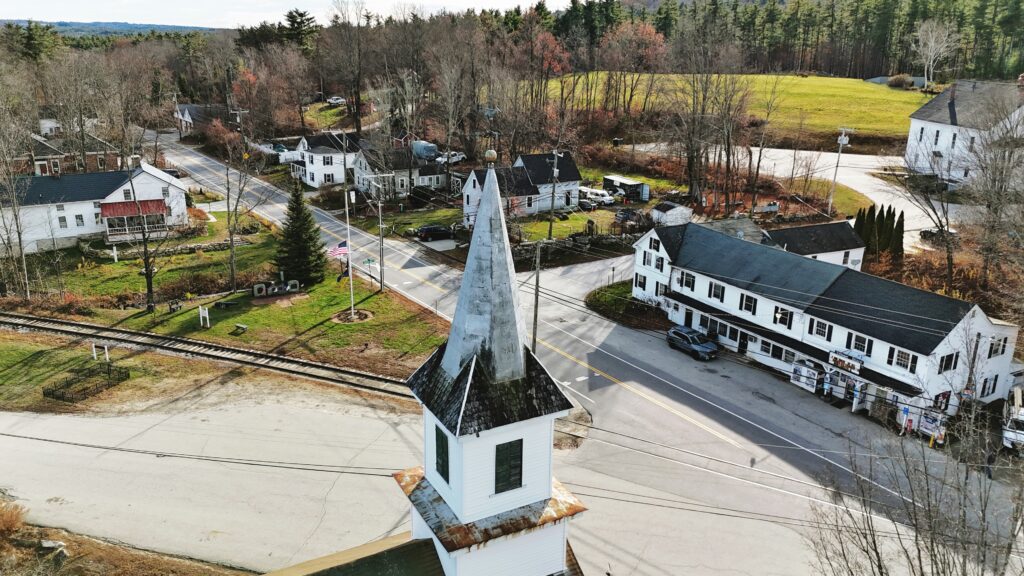
Ministry in the middle of nowhere must become just as dear to us as reaching gospel-starved people in other nations and population centers in the United States. 97% of America is rural by landmass. How much of it are you willing to accept failing to demonstrate the kind of glory God intends?
Adjusting the Missions Map
The symptoms of rural America highlight the need to think more carefully about our missions map.
Instead of starting with people, let’s start with God’s ultimate purpose. This requires us to replace more pragmatic stewardship questions with questions like, “Where is there no faithful witness to God’s glory?” That question will still lead us to cities. And it should! But it will also take us to towns and municipalities that would otherwise remain unnoticed.
God wants to be glorified in and from places no one has ever heard of. And He wants faithful, healthy churches to do it.
What if we spend more time exposing the next generation of missionaries, planters, and church revitalizers to a more robust theology of place that insists on the total saturation of God’s glory through the church?
What if we functioned as if the presence of a healthy church in a forgotten town is just as strategic as sending a missionary to the jungle or new pastors from city to city?
What if we measured success not only by conversions, but by the number of communities where the gospel is on display through a healthy local church?
What can you do to help ensure the spread of God’s glory over the 97% of America that is rural?