
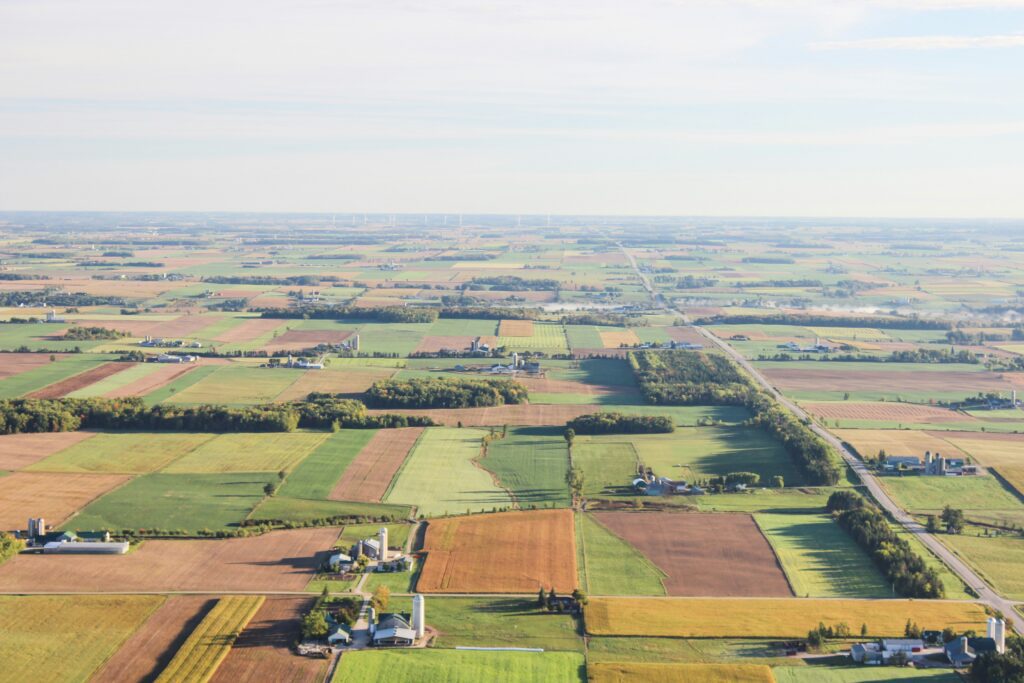
Rural America is hurting. But don’t take my word for it. Just head over the river and through the woods, and you’ll find all the evidence you need. Shuttered storefronts, broken down barns, abandoned schools, and church buildings turned into chicken coops are common scenery. Behind the crumbling facade of a wholesome heartland lies a world of addiction, poverty, and brokenness that might surprise you. But who is to blame? The government? Big business? The locals?
We could make a long list of contributors to the decline of rural America, but I want to zoom in on one group that has surprisingly neglected rural America for decades: the church.
Am I suggesting that the church could have prevented the economic and social decline that has left rural America in such a troubling state? While I do believe that a greater concentration of people living out the principles of Scripture is good for any region, my purpose is not to establish a link between community health and the presence of the church. Instead, I am arguing that, as Christians, we have an obligation to pursue the demonstration of God’s glory through healthy churches in all places. This includes rural America, and the visible decline of our heartland should function like a check engine light for the evangelical church. But what is it telling us?
In this case, the light on the dashboard indicates a problem with our missiology. For decades, the church has focused most of its missional effort on urban centers and international hotspots. In other words, our activity has been driven by one key metric: people.
But what’s wrong with that? Aren’t people the point? How could Christ’s Kingdom advance without people?
Clearly, people matter. Christ died to redeem people from every tribe, tongue, and nation. The church is sent to proclaim the gospel to every man, woman, and child. The redemption of people is important.
But it’s not the only thing that’s important.
It’s not even a matter of first importance!
When we identify people as the bullseye at the center of the target, we are unwittingly setting a course that drifts toward pragmatism.
Ouch! You’re probably not used to having the “p” word aimed in your direction. But, hear me out. When stewardship becomes overly focused on efficiency, we depart from the pattern of Gospel advancement demonstrated throughout Scripture. Efficiency is often the enemy of Kingdom work. Don’t believe me? Just ask Gideon. Or Paul. Or Christ!
Efficiency asks questions like, “Where can we have the most influence? Where are the most unreached per square mile? Where’s the best crossroad community to teach from?” Those questions are fine, but let’s not underestimate the consequences of putting too much weight into those concerns. Remember that prioritizing one place comes at the expense of deprioritizing another.
Enter rural America! I don’t think anyone made a decision to overlook it, but by prioritizing crossroads communities and unreached people groups, less populated places naturally fall out of focus. This is an unintended (and largely unnoticed!) side effect rooted in pragmatism. And to correct our error, we must reevaluate what’s at the center of the target.
But, if our primary aim should not be the redemption of man, what should it be? I’d like to make a suggestion: the glory of God! And, when God’s glory is in the crosshairs, our stewardship is redefined.
The symptoms visible in rural America should at least cause us to step back from our carefully crafted strategies to ask the question: What does God want? Yes, God wants to redeem people. But more than that, He wants the earth to be filled with the knowledge of His glory as the waters cover the sea (Habakkuk 2:14)! That’s going to require a stewardship willing to sacrifice efficiency at the altar of faithfulness.
Hang on for part two as I unpack this thought later this week.